
The Number One Question We Hear About Kitchen Remodeling
If you're considering a kitchen remodel, you've probably asked yourself the same question nearly every homeowner asks us: how long is this actually going to take? It's a fair question. Your kitchen is the most-used room in your home, and living without it for an extended period sounds daunting.
The truth is, a typical kitchen remodel in San Diego takes anywhere from six to twelve weeks once construction begins, depending on the scope of work. But that timeline feels a lot more manageable when you know exactly what's happening at each stage. Let's walk through a realistic week-by-week breakdown so you can plan ahead and set proper expectations.
Before Construction Begins: The Pre-Build Phase
Before a single cabinet is removed, there's important groundwork to cover. This phase usually takes two to six weeks on its own, and it includes:
- Design and material selections — Choosing your layout, cabinetry, countertops, backsplash, fixtures, and appliances. This is where your vision takes shape.
- Permits and approvals — San Diego requires building permits for most kitchen remodels, especially when plumbing, electrical, or structural changes are involved. The city's Development Services Department processes these, and timelines can vary.
- Material ordering and lead times — Custom cabinets can take four to eight weeks to arrive. Countertop fabrication, specialty tile, and certain appliances also have lead times that need to be factored in.
A good remodeling contractor will coordinate all of this before scheduling your start date so there are no unnecessary delays once demolition begins. At Blackstone Remodeling Co, we don't break ground until materials are confirmed and the project schedule is locked in.
Week 1: Demolition and Discovery
This is the most dramatic week of the entire project. Your old cabinets, countertops, flooring, and sometimes walls come out. It's loud, it's dusty, and it transforms your kitchen into a blank canvas fast.
This is also when we occasionally discover surprises hidden behind walls — outdated wiring, old galvanized plumbing, or even minor water damage. Many older homes in neighborhoods throughout San Diego, La Mesa, and El Cajon were built decades ago, and what's behind the drywall doesn't always match what's on the surface. A reputable contractor will communicate any findings immediately and present solutions before moving forward.
Weeks 2–3: Rough-In Work
With the space opened up, the mechanical trades move in. This phase includes:
- Electrical rough-in — Running new circuits, adding outlets where your updated layout requires them, and wiring for under-cabinet lighting or a new range hood.
- Plumbing rough-in — Relocating water supply lines and drains if your sink, dishwasher, or refrigerator position is changing.
- HVAC adjustments — If walls moved or the layout shifted significantly, ductwork may need to be rerouted.
Once rough-in work is complete, the city inspector comes out to verify everything meets current building codes. This inspection must pass before walls can be closed up. It's a critical checkpoint that protects you as the homeowner.
Weeks 3–4: Drywall, Patching, and Prep
After inspections pass, drywall goes up and gets finished. Any structural changes — like a removed wall or a new pass-through — get their final framing and drywall treatment. Walls are taped, mudded, sanded, and primed.
This phase might feel slow compared to the excitement of demolition week, but it's essential. Clean, properly finished walls are the foundation for everything that comes next.
Weeks 5–6: Cabinets and Major Installations
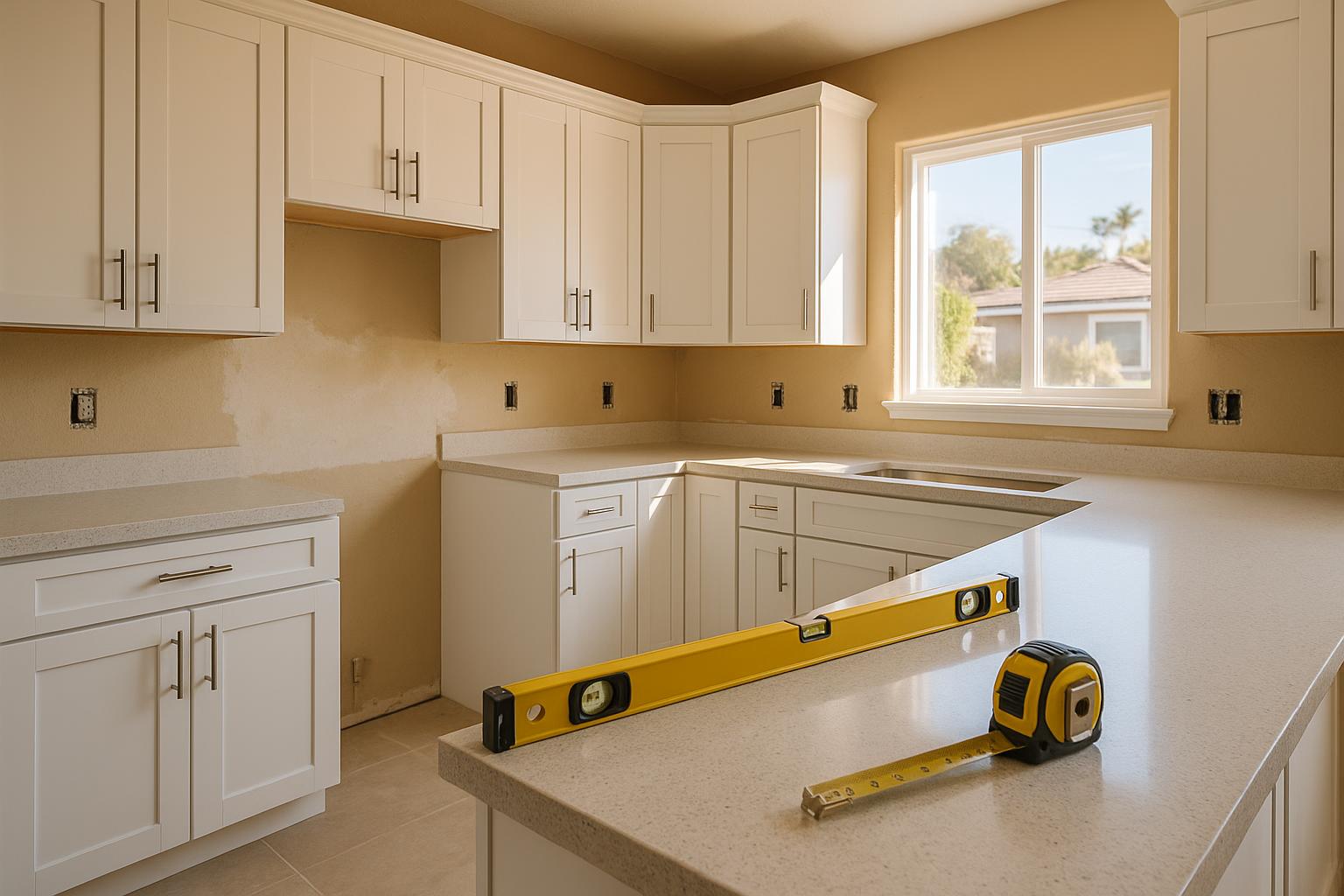
Now the kitchen starts to look like a kitchen again. Cabinet installation is one of the most satisfying milestones in the entire project. Once cabinets are set and leveled, the space suddenly has structure and you can see your new layout come to life.
After cabinets are in place, countertop fabricators come out to do final measurements, often called a template. This ensures a precise fit. Depending on your material — granite, quartz, marble, or butcher block — fabrication and installation typically takes one to two weeks from the template date.
Weeks 7–8: Countertops, Backsplash, and Flooring
This is where finishes start layering in and the design really comes together. Countertops are installed, followed by the backsplash tile. Flooring goes in around this time as well, whether you've chosen hardwood, luxury vinyl plank, or tile.
Each of these trades needs proper sequencing. For example, tile backsplash installation happens after countertops are set so the tile meets the counter edge cleanly. Your contractor should be managing this schedule tightly so one trade flows into the next without gaps.
Weeks 8–10: Fixtures, Appliances, and Final Details
The home stretch includes:
- Plumbing fixtures — Faucet, sink, garbage disposal, and dishwasher hookups.
- Electrical fixtures — Light fixtures, outlet covers, switches, and under-cabinet lighting.
- Appliance installation — Range, refrigerator, microwave, and dishwasher get placed and connected.
- Hardware — Cabinet knobs, pulls, and any final trim pieces.
- Paint and touch-ups — Final coat of paint on walls and any trim that needs attention.
A final city inspection is scheduled to sign off on all permitted work. Once that passes, you're nearly at the finish line.
The Final Walkthrough
Before we consider any project complete, we do a detailed walkthrough with the homeowner. We check every door, drawer, fixture, and finish together. If anything needs adjustment — a cabinet door that's slightly off, a paint touch-up, a caulk line that could be cleaner — it goes on a punch list and gets addressed promptly.
This step matters. It's the difference between a project that feels finished and one that truly is finished.
What Can Extend Your Timeline?
Even with careful planning, certain factors can add time to a kitchen remodel:
- Custom material delays — Supply chain issues still affect certain products. Ordering early helps.
- Permit processing times — San Diego's permitting timeline can fluctuate depending on the season and project complexity.
- Scope changes mid-project — Deciding to add recessed lighting or change your countertop material after work has started can push the schedule.
- Unforeseen structural or code issues — Older homes in Chula Vista, Encinitas, Carlsbad, and across the county sometimes have hidden conditions that require additional work.
The best way to stay on schedule is to make decisions early, trust the process, and work with a contractor who communicates proactively.
A Stress-Free Kitchen Remodel Starts With the Right Plan
Understanding the timeline takes the mystery out of the process and helps you plan your life around the renovation. Set up a temporary kitchen station, know which weeks will be the loudest, and give yourself grace during the in-between stages.
At Blackstone Remodeling Co, we guide San Diego homeowners through every phase of their kitchen remodel with clear communication and realistic scheduling. If you're ready to start planning your renovation, we'd love to walk you through what your specific project timeline would look like.